CNC Nesting Machines
Nesting machines cut every part of a cabinet from full sheets in one pass, with vertical drilling and grooving done on the same table. Five configurations, from a 4-process starter machine to a fully automatic nesting cell.
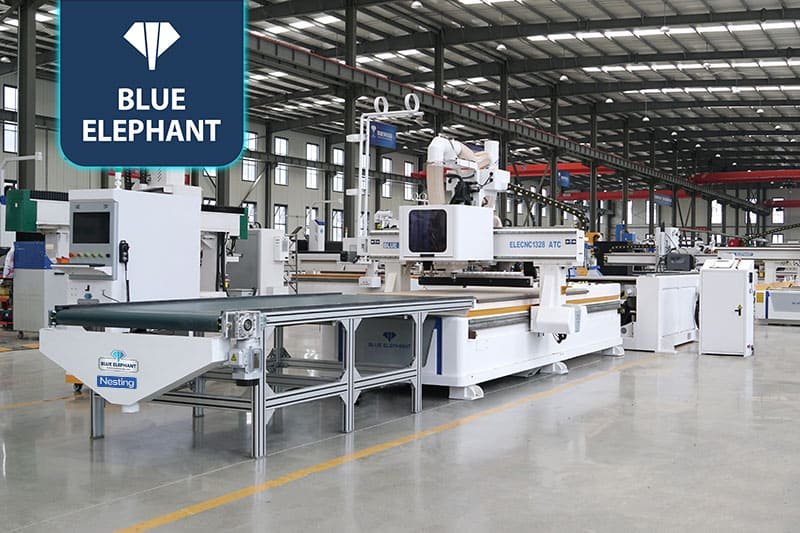
Start from the size of your shop
Most buyers end up with one of these three.
Small shop
First CNC, a few cabinets a day, simple repeating parts.
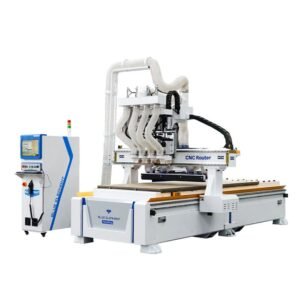 4-Process CNC Nesting Machine
Four fixed tools cover cutting, grooving and drilling at the lowest cost.
Growing shop
Custom orders, varied parts, one operator at the machine.
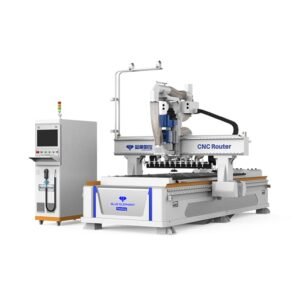 ATC CNC Nesting Machine
The tool changer handles any part mix and loading can be added later.
Factory
Cutting all shift, labeled parts feeding edge banding and drilling.
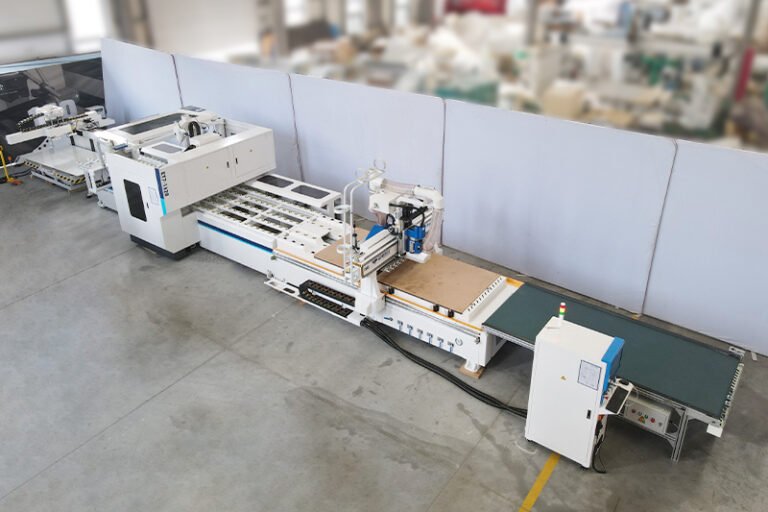
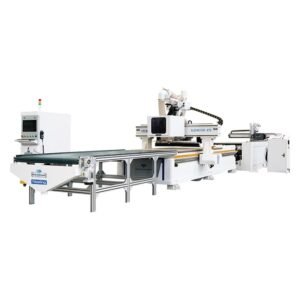 Automatic Nesting Cell (Loading, Labeling & Unloading)
Loading, labeling and unloading are automatic, so the spindle keeps cutting.
All models side by side
ATC CNC Nesting Machine
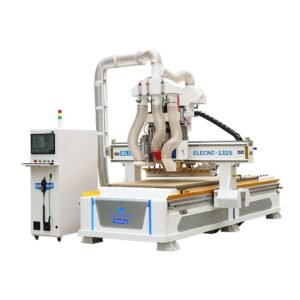
Nesting Machine with Drilling Block
4-Process CNC Nesting Machine
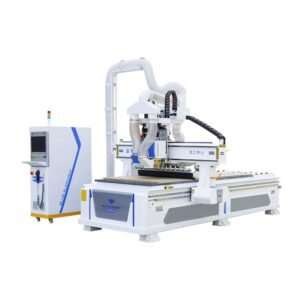
Invisible Connector Nesting Machine
Automatic Nesting Cell (Loading, Labeling & Unloading)
How a nesting machine works
From a full sheet to labeled cabinet parts, without moving the board between machines.
-
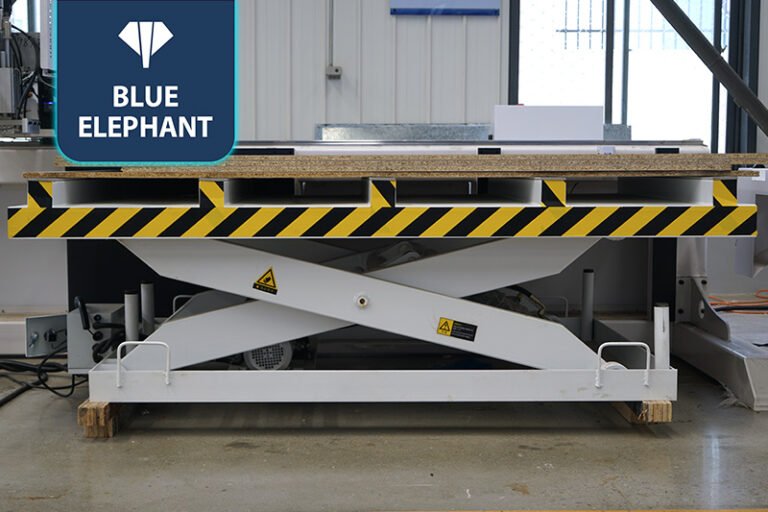
Load
A full sheet is placed on the table, by hand or from a lift table.
-
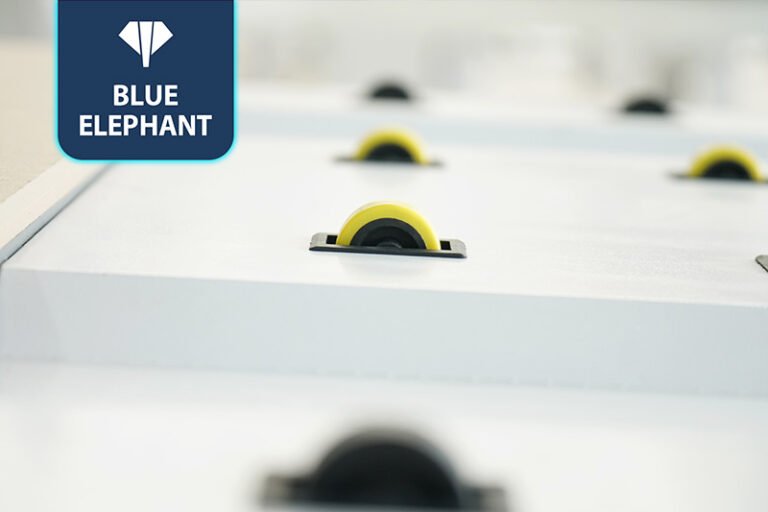
Locate and hold
Pins set the zero point and the vacuum table holds the sheet flat.
-
Cut, drill, groove
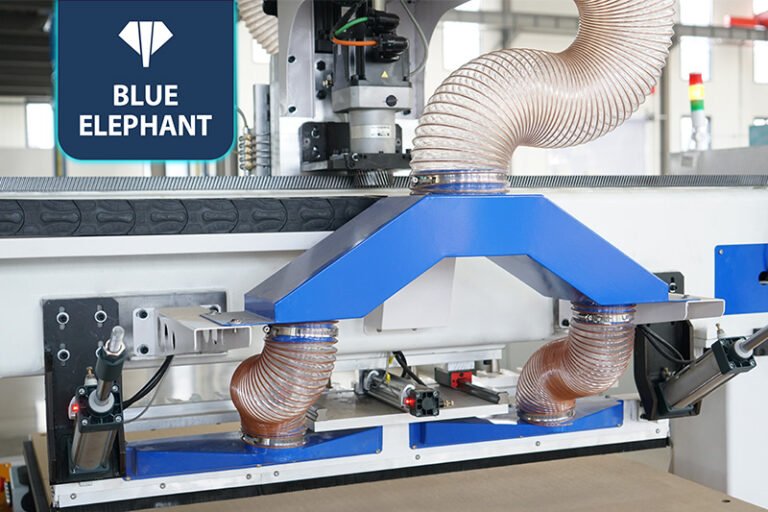
The program cuts every part, drills vertical holes and mills grooves.
-
Unload
Parts come off labeled and go straight to edge banding.
Which nesting machine fits your shop?
| Model type | Best for | Typical output* | Operators |
|---|---|---|---|
| 4-process nesting machine | Small shops moving from a panel saw | Low–medium | 1 |
| ATC nesting machine | Cabinet shops with varied parts and tools | Medium | 1 |
| Nesting with drilling block | Shops that drill many holes per part | Medium | 1 |
| Invisible-connector nesting | Modern “no visible hole” furniture | Medium | 1 |
| Automatic nesting cell | Factories running two shifts | High | 1 for 1–2 machines |
*Output depends on part mix and nesting software. Send us your typical cabinet list for a real estimate.
What a nesting machine replaces
In a traditional shop, a panel saw cuts the parts, a separate boring machine drills them and someone moves every part between the two. A nesting machine does cutting, vertical drilling and grooving in one setup, directly from your design software. Material yield usually improves because the software packs parts of different jobs onto the same sheet.
It does not replace edge banding or horizontal (side) drilling. Most shops pair a nesting machine with an edge bander, and later add a 6-sided drilling machine when volume grows.
Not sure which one you need?
Common questions
What sheet sizes can a nesting machine handle?
Standard tables take 1220 × 2440 mm (4 × 8 ft) sheets. Larger tables for 1220 × 2800 mm or 2100 × 3000 mm sheets are available on most models.
Which software is used?
Most cabinet makers design in a cabinet design program and export nesting files (G-code) to the machine. We can recommend software that matches the controller.
What power supply is needed?
Machines are normally built for three-phase industrial power. Voltage and frequency are configured to your country (for example 380 V/50 Hz or 220 V/60 Hz).
Do you provide installation?
Yes. Remote installation guidance is standard, and on-site installation and operator training can be arranged.
Tell us about your project
Tell us what you make and roughly how many sheets you cut per day. We reply within one working day.
- What you get back
- A recommended configuration, FOB or CIF price and lead time.
- Useful to include
- Sheet size, board types, your power supply and any machines you already own.
- Want to see it first?
- Ask for a video call from the factory floor.